If you are still finishing drawings or picking contractors, a construction survey might not be on your mind yet. It should be. This work turns a design on paper into exact points on the ground. Skipping it until crews show up can cost time and money later.
Salt Lake City has a lot going on right now. New apartment buildings, infill projects, and public road work are all happening close together. Utilities get moved. Roads get widened. Lots get reshaped. A construction survey done early gives your project a solid starting point before any of that activity causes problems.
Where a Construction Survey Fits Into Preconstruction Planning
A construction survey sets the physical points and marks that a project builds from. It is not the same as a boundary survey. A boundary survey shows where a property line sits. A construction survey comes after the design is done and turns that design into spots a contractor can use in the field.
The best time to call a surveyor is during planning, not after. Early on, the surveyor can look at the site plans and flag anything unclear. They can also check that the design fits real conditions on the property, like existing slopes, drainage, or nearby buildings.
If you wait until permitting or the first day of work, the surveyor ends up fixing problems instead of stopping them early. Bringing them in during planning gives everyone the same starting point before big decisions get locked in.
Turning Design Plans Into Reliable Field Positions
Design drawings show where a building, road, or utility line should go. A construction survey makes those spots real and measurable on the actual property.
This starts with setting control points across the site. Horizontal control marks the exact spot of things like building corners or road centerlines. Vertical control ties everything to a shared elevation. This matters for grading, drainage, and foundations.
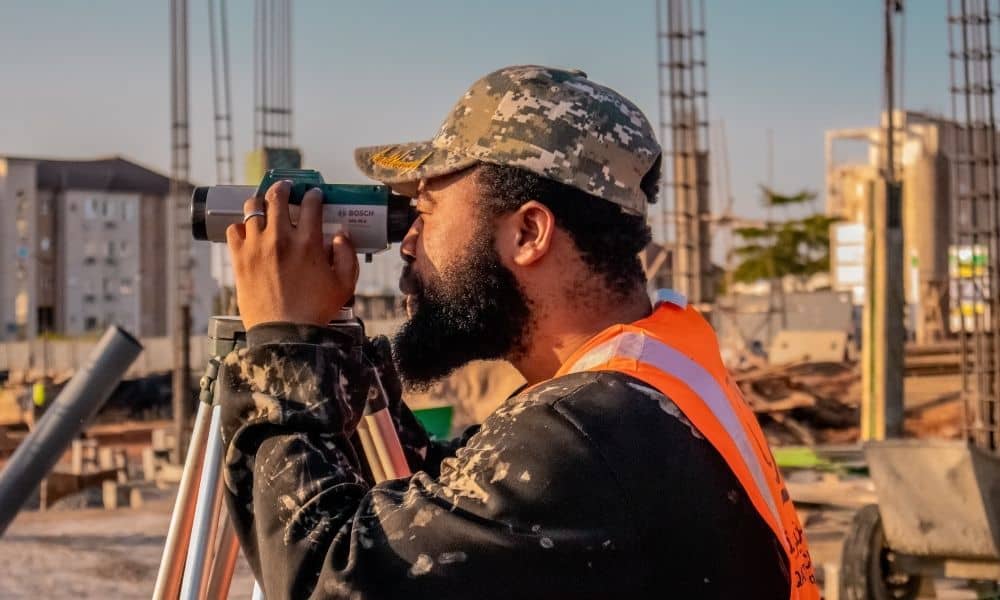
Once those points are set, the surveyor stakes out the project to match the approved design. Contractors then build from those stakes and marks. If the control points are off even a little, that mistake can carry through every step after it. Getting this right early stops small errors from turning into big ones.
Establishing Survey Control Before Multiple Trades Mobilize
Most projects have more than one crew working around the same time. Grading crews, utility crews, concrete crews, and building crews often need to use the same points, even if they are not on site together.
A shared set of control points fixes this. Instead of each crew measuring from a different spot, everyone works off the same marks. This keeps foundations, utilities, and roads lined up with each other instead of drifting apart as each crew reads the plans their own way.
Setting this control before all the trades show up also helps when a schedule changes. If one crew finishes early or another gets delayed, the next crew can still start from the same points without needing someone to explain the layout again. This matters on busy sites, including ones near ongoing city road work, where nearby construction can affect access or utility hookups if the plan is not clear from the start.
Catching Layout Conflicts Before Permanent Work Is Installed
One of the best things a construction survey does is catch problems while they are still cheap to fix. A layout mistake found before concrete gets poured is a quick fix. The same mistake found after is a repair job, and sometimes a teardown.
Common problems include a building that sits too close to a setback line, a utility line that runs closer to a structure than planned, or a grade that does not drain the way the design expected. A surveyor working from accurate control points can spot these issues by checking staked positions against the approved plans before anything permanent goes in.
This kind of check helps a lot on tight lots or sites with buildings close together, which is common on infill projects. Checking clearances and setbacks on the ground, instead of trusting the drawings are perfect, gives the team a chance to fix the plan instead of the finished work.
Maintaining Survey Control Through Later Construction Phases
Survey control is not a one-time job. Marks can get disturbed by equipment, weather, or regular site work. A project that relies on one early survey and never checks it again is taking on extra risk.
Checking the control points again during construction confirms they are still accurate and that the work matches the plans. This matters most at key steps, like before foundations get poured, before utilities get covered up, or before a new phase of a project starts.
On longer projects, this ongoing check also helps when teams change. A new contractor or manager who joins partway through can trust the recorded, checked control points instead of trying to guess the layout from memory. Ask your surveyor early about when these checks should happen so they get built into the schedule instead of added at the last minute.